
Knee Conditions VA Disability Ratings & Claims Guide
Last updated: September 2026
Maybe your knee won't bend far enough to kneel anymore, or it won't fully straighten when you stand up after sitting for a while. Plenty of us picked up knee problems in service from rucking, jumping out of trucks, running on concrete, or one bad landing, and kept going because that was the job. Years later, the knee is still telling you about it.
VA rates these problems in a specific, measurable way. It doesn't rate a diagnosis name. It rates how far your knee moves, in degrees, plus a few related factors. Once you understand that, it's much easier to see what evidence you need and what to watch for at your exam. This guide covers how VA defines and rates limited knee motion, how to get it service-connected, what happens at the C&P exam, and where claims tend to go wrong.
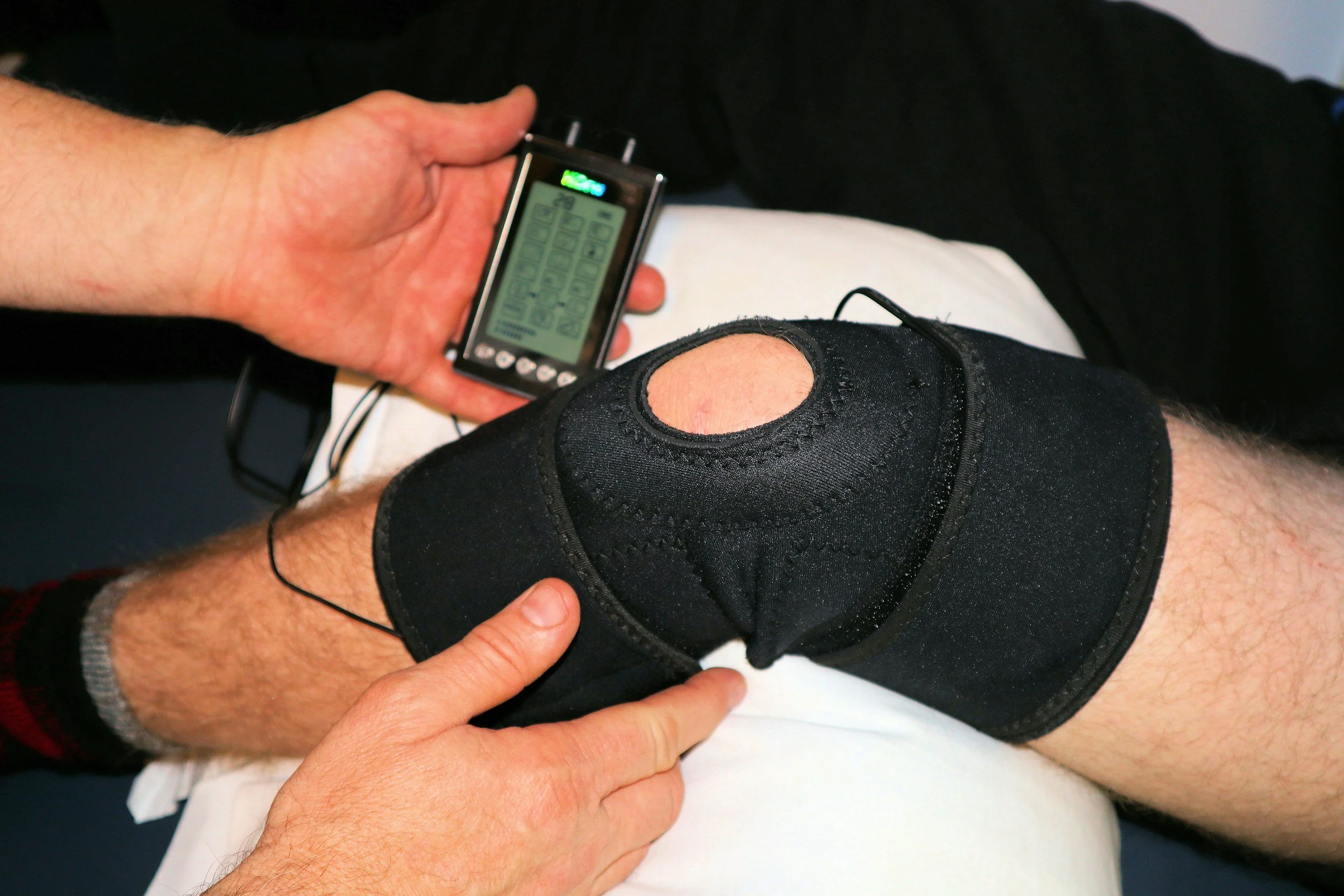
Knee Conditions (Limitation of Flexion and Extension) at a Glance
Diagnostic codes: DC 5260 (limitation of flexion) and DC 5261 (limitation of extension). Related knee codes in the same section include DC 5256 (ankylosis), DC 5257 (recurrent subluxation or instability), DC 5258 and 5259 (cartilage problems), and DC 5003/5010 (arthritis).
Rating percentages: 0%, 10%, 20%, or 30% for limited flexion. 0%, 10%, 20%, 30%, 40%, or 50% for limited extension. The same knee can get a separate rating for each, and VA then combines them.
Common paths to service connection: Direct (an in-service injury, a current diagnosis, and a medical link) and secondary (caused or worsened by another service-connected condition, like the opposite knee or your back).
Key evidence: Service treatment records, recent range-of-motion measurements in degrees, a nexus opinion, documentation of painful motion and flare-ups, lay statements about daily limits, and X-rays if arthritis is involved.
Main exam form: VA Form 21-0960M-9, the Knee and Lower Leg Disability Benefits Questionnaire (DBQ).
Official rating criteria: 38 CFR 4.71a on eCFR
How the VA Defines Knee Conditions (Limitation of Flexion and Extension)
Knee conditions fall under the musculoskeletal system in VA's rating schedule, specifically 38 CFR 4.71a. The last substantive overhaul of this musculoskeletal rating schedule took effect February 7, 2021; a 2021 Board of Veterans' Appeals decision confirms that revision did not change the criteria for knee ankylosis under DC 5256.
"Limitation of flexion" and "limitation of extension" aren't diseases. They're two measurements of the same joint:
Flexion is how far your knee bends. Think of pulling your heel toward your backside.
Extension is how far your knee straightens. Think of locking your leg out straight in front of you.
VA measures both against a normal baseline. According to the Board of Veterans' Appeals, normal knee flexion is to 140 degrees and normal extension is to 0 degrees. So a healthy knee bends to about 140 degrees and straightens all the way to 0. If your knee stops bending at 90 degrees, you have limited flexion. If it stops 10 degrees short of straight, you have limited extension.
The underlying diagnosis can be almost anything: a torn meniscus, patellofemoral pain, a ligament injury, post-surgical scarring, or degenerative arthritis. For rating purposes, VA mostly cares about the measured result. Those numbers come from a clinician using a goniometer, a hinged protractor-style tool that measures joint angles. Your description of stiffness matters for the functional-loss picture, but the degree readings drive the rating codes.
The practical takeaway: get your range of motion measured and written down in degrees, not just described as "decreased" or "limited."
How the VA Rates Knee Conditions (Limitation of Flexion and Extension)
Flexion and extension are rated on two separate scales. For both, a smaller number of degrees tells a different story. With flexion, a lower number means the knee bends less. With extension, a higher number means the knee is stuck further from straight.
Here's the flexion scale under DC 5260:
| Rating | What it generally means |
|---|---|
| 0% | The knee bends only to about 60 degrees or better; motion is reduced but not enough for a paying rating on its own |
| 10% | The knee bends only to about 45 degrees |
| 20% | The knee bends only to about 30 degrees |
| 30% | The knee bends only to about 15 degrees, which is very little movement |
And here's the extension scale under DC 5261:
| Rating | What it generally means |
|---|---|
| 0% | The knee stops about 5 degrees short of fully straight |
| 10% | The knee stops about 10 degrees short of straight |
| 20% | The knee stops about 15 degrees short of straight |
| 30% | The knee stops about 20 degrees short of straight |
| 40% | The knee stops about 30 degrees short of straight |
| 50% | The knee stops about 45 degrees short of straight, leaving it badly bent at all times |
Read the full rating criteria on eCFR.
Flexion and Extension Can Be Rated Separately
Pyramiding is VA's rule against rating the same symptom twice under different codes. Many veterans assume that rule means one knee gets one range-of-motion rating. It doesn't. Limited bending and limited straightening are different losses, so VA can assign a separate rating for each on the same knee.
VA's General Counsel spelled this out in Precedent Opinion 9-2004 with a worked example. If a knee moves only from 15 degrees to 45 degrees, meaning it can't straighten past 15 or bend past 45, the veteran could get a 10% rating for limited flexion and a 20% rating for limited extension. Those two ratings are then combined using VA's combined ratings table.
Related Knee Codes That Can Stack
Range of motion isn't the only thing VA rates on a knee. Two other codes come up often:
Instability (DC 5257): A knee that slips or gives way is rated separately from motion loss, at 10%, 20%, or 30% depending on severity, described as slight, moderate, and severe recurrent subluxation or lateral instability.
Arthritis (DC 5003/5010): When X-rays confirm arthritis but your motion loss is too small for a paying rating, the arthritis code can step in. Where there's no limitation of motion, VA assigns 10% for X-ray evidence involving two or more major joints, or 20% if there are also occasional incapacitating flare-ups. The knee counts as a major joint.
Ankylosis (DC 5256) covers a knee that's frozen in place, and DC 5258 and 5259 cover cartilage problems. These have their own criteria in the same regulation.
Bilateral Factor and Combined Ratings
If both knees are rated, or a knee plus the other leg, VA may apply the bilateral factor, a small add-on for disabilities affecting both arms or both legs. My post on how VA combines multiple ratings walks through the combined ratings table, the bilateral factor, and the current pay rates.
The takeaway: a single knee can carry more than one rating. Look at flexion, extension, instability, and arthritis separately.
Getting Knee Conditions (Limitation of Flexion and Extension) Service Connected
Direct Service Connection
Most knee claims go this route. You need three things according to 38 CFR 3.303 for general direct service connection.
A current diagnosis of a knee condition.
An in-service event or injury, like a parachute landing, a fall during a field exercise, a twisted knee on a run, or years of repetitive strain.
A nexus, which is a medical opinion linking your current condition to that event. VA uses the "at least as likely as not" standard, meaning a 50% chance or better.
If you never went to sick call for your knee, you're not out of options. A buddy who saw you go down on a ruck march, or a spouse who remembers you icing your knee every night after PT, can help fill that gap.
Secondary Service Connection
A knee condition can be service-connected if another service-connected condition caused it or made it worse. A common example: your right knee is already service-connected, and years of favoring it put extra strain on your left knee. A service-connected back or hip condition that changes how you walk can do the same thing.
This runs in both directions. Your knee can be the secondary condition, or it can be the cause of other ones. I cover both in the secondary conditions section below.
Presumptive Service Connection
No presumptive list or special rule applies to ordinary knee limitation-of-motion claims, so the direct and secondary rules above are what you'll work with.
Evidence That Strengthens Your Claim
Knee claims are won on documentation. For a broader walkthrough of where to find records and how to work with doctors, see my guide to gathering strong medical evidence. For knees specifically, focus on these:
Service treatment records: Sick call visits, profiles, physical therapy, or repeated knee complaints during service. Even one note about a knee sprain in basic training can matter.
A current diagnosis with degree measurements: Ask your doctor to record your flexion and extension in degrees with a goniometer. A note that says "reduced ROM" is far less useful than one that says "flexion to 95 degrees, extension to 10 degrees."
A nexus opinion: A letter from a doctor explaining why your knee condition is at least as likely as not related to your service, or to a service-connected condition. The strongest letters show the doctor reviewed your records and explain the medical reasoning.
Documentation of painful motion: Painful motion must be considered as a factor under VA regulation. A knee that's objectively painful on motion can support at least the minimum compensable rating, even if the degree readings alone would land at 0%. This rule isn't limited to arthritis.
Flare-up records: Write down how often flare-ups happen, how long they last, and what you can't do during them. If your knee swells after climbing stairs at work, that belongs in your file.
Lay statements: You can describe what you observe: can't kneel to play with your kids, need the handrail on stairs, knee buckles stepping off a curb. A spouse or coworker can back that up. VA Form 21-10210 is the correct current form for lay/buddy statements. I also offer a Personal Statement Workbook in my store.
X-rays: If arthritis is part of the picture, VA needs X-ray confirmation for the arthritis code to apply.
The takeaway: ask for numbers. Degree readings, flare-up frequency, and specific activities you can't do give VA something concrete to rate.
What to Expect at Your C&P Exam
For logistics like scheduling, rescheduling, and who does the exam, see my post on what to expect at your C&P exam. Here's what's specific to knees.
The exam centers on VA Form 21-0960M-9, the Knee and Lower Leg DBQ. Reading it ahead of time shows you exactly what the examiner has to record. This DBQ explainer walks through its sections.
Range-of-Motion Testing
The examiner uses a goniometer to measure how far your knee bends and straightens, rounded to the nearest 5 degrees. The form calls for four sets of measurements:
Active range of motion: You move the knee yourself.
Passive range of motion: The examiner moves the knee for you.
Weight-bearing: Measured while you're standing on the leg.
Non-weight-bearing: Measured while you're sitting or lying down.
The final sentence of 38 CFR 4.59 requires that the examiner test range of motion for pain on both active and passive motion, in weight-bearing and non-weight-bearing positions, and, if possible, measure the opposite undamaged joint for comparison. Courts have found exams that skip these tests to be inadequate.
Repetitive Use and Flare-Ups
The examiner should test your range of motion again after at least three repetitions and account for any additional loss from pain, weakness, fatigability, or incoordination. This functional-loss analysis works alongside the range-of-motion codes rather than replacing them. The examiner should also ask about flare-ups and estimate how much motion you lose during one.
This is where honest detail helps. If your exam happens on a good day, tell the examiner what a bad day looks like. "During a flare-up, I can barely bend my knee enough to get into my truck" gives them something to work with.
Instability Testing
The examiner should also check whether your knee is stable, since instability is rated separately under DC 5257. If your knee gives way, say so, and describe when it happens.
If the Report Gets It Wrong
VA regulation describes the goniometer as necessary for measuring joint motion in these exams. If your exam report has no degree readings, skips the required 4.59 tests, or says nothing about flare-ups, it may be inadequate. That's worth raising in a decision review.
Common Reasons Knee Conditions (Limitation of Flexion and Extension) Claims Are Denied
For the full picture of fixing denials and choosing a review option, see my post on common reasons VA claims get denied. These are the patterns that show up most with knees:
No nexus or a weak one: Missing medical evidence or no opinion linking the current knee to service is one of the most common problems, according to veterans law firms. A one-line letter rarely fixes this. A reasoned opinion often does.
A gap between service and now: If your file jumps from a knee injury in 2008 to a diagnosis in 2024 with nothing in between, VA may doubt the connection. Lay statements about ongoing symptoms and any treatment records from the gap years help.
Flare-ups left out: If nobody documents how flare-ups affect your motion, endurance, or stability, the rating can come in low.
Painful motion overlooked: A knee that's objectively painful on motion shouldn't sit at 0%. Keep in mind the flip side, though. Pain alone doesn't automatically earn separate flexion and extension ratings. Each one still needs to meet its own criteria.
Bilateral factor missed: When both knees or both legs are rated, check your decision letter to see whether the bilateral factor was applied.
Secondary conditions never claimed: Hip, back, or opposite-knee problems caused by your knee won't get rated unless you claim them.
A 0% rating on a knee isn't a denial. It means VA agreed the knee is service-connected. If it gets worse, you can file for an increase without proving service connection again.
Secondary Conditions Linked to Knee Conditions (Limitation of Flexion and Extension)
Your body adjusts when one knee doesn't work right. You shift weight, shorten your stride, and lean on the other side. Over time, that altered gait can cause problems elsewhere.
Conditions commonly claimed as secondary to a knee condition:
Hip pain from compensating for the injured knee
Back strain from an uneven walk
Problems in the opposite knee from carrying extra load
Other gait-related issues in the ankles or feet
Conditions a knee problem is often secondary to:
A service-connected back condition that changes how you walk
A service-connected opposite knee that shifts weight onto this one
A service-connected hip or ankle condition that alters your stride
For each secondary claim, you still need a diagnosis and a medical opinion explaining the link. "My hip hurts and my knee is service-connected" isn't enough on its own. A doctor explaining that your altered gait from the knee is at least as likely as not causing or worsening your hip condition is what VA needs.
These connections matter beyond the individual ratings. Secondary conditions can raise your combined rating and, in some cases, help you qualify for TDIU.
When TDIU May Apply
TDIU, or total disability based on individual unemployability, lets VA pay you at the 100% rate even if your combined rating is lower. It applies when your service-connected disabilities keep you from securing or following substantially gainful employment. A veteran whose knees and back rule out standing, walking, climbing, and lifting may be in that position, especially if their work history is in physical jobs.
Under 38 CFR 4.16(a), the schedular thresholds are:
One service-connected disability rated at least 60%, or
Two or more service-connected disabilities, with at least one rated 40% or more and a combined rating of 70% or more.
The part that matters most for knee claims is how VA counts "one disability." For the 60% and 40% thresholds, the regulation treats these as a single disability:
Disabilities of one or both lower extremities, so both knees plus a hip or ankle condition can count together.
Disabilities from a common etiology, meaning conditions that trace back to the same cause, like a knee injury and the secondary conditions it led to.
So a veteran with limited motion in both knees plus a secondary hip condition may be able to count those together to reach the 40% or 60% mark. Your combined rating still has to reach 70% for the second path.
The takeaway: if your knee and related conditions are keeping you out of work, look at your ratings through the "one disability" lens before assuming you don't qualify.
Conclusion
A knee that won't bend or straighten the way it used to is one of the more measurable conditions VA rates, and that works in your favor. The path is clear: show the in-service injury, get current range-of-motion measurements in degrees, connect the two with a solid nexus opinion, and make sure painful motion, flare-ups, and instability are documented. Read the Knee and Lower Leg DBQ before your exam so you know what the examiner should be testing, and check your decision letter for separate flexion and extension ratings, instability, arthritis, and the bilateral factor.
Don't forget the conditions your knee may have caused, or the ones that caused it. Those links can change your overall rating in a meaningful way.
If you'd like someone to look over your evidence before you file, an accredited Veterans Service Officer can help at no cost. A VSO is often my first suggestion to clients.
Wondering how this applies to your condition? Every veteran's situation is a little different. Schedule a free consultation to talk through what you've read and get connected with a VSO who can help with your claim.
Continue Reading
Know a veteran or family member who could use this? Share it.