
Last updated: November 2026
A kidney diagnosis often shows up in a lab report rather than through pain you can point to. You may feel tired or notice nothing at all, and then a routine blood test says your kidneys aren't filtering the way they should. If you're a veteran with chronic kidney disease, you may be wondering whether VA will compensate you for it, how it's rated, and what you have to prove.
VA does rate chronic kidney disease, and the rating rules are more concrete than many people expect. They're based mostly on lab numbers, not on how you describe your symptoms. This guide covers how VA defines and rates CKD, the ways to get it service-connected, the evidence that matters, what happens at the exam, common reasons for denial, related conditions, and when TDIU (Total Disability based on Individual Unemployability, a benefit that pays at the 100% rate when your service-connected conditions keep you from working) might apply.
I'm not an attorney or a VSO (Veterans Service Organization, an accredited group that helps veterans with claims for free), and this post isn't legal advice. It's general education based on VA's published rules. For help with your specific claim, an accredited VSO representative can help at no cost.
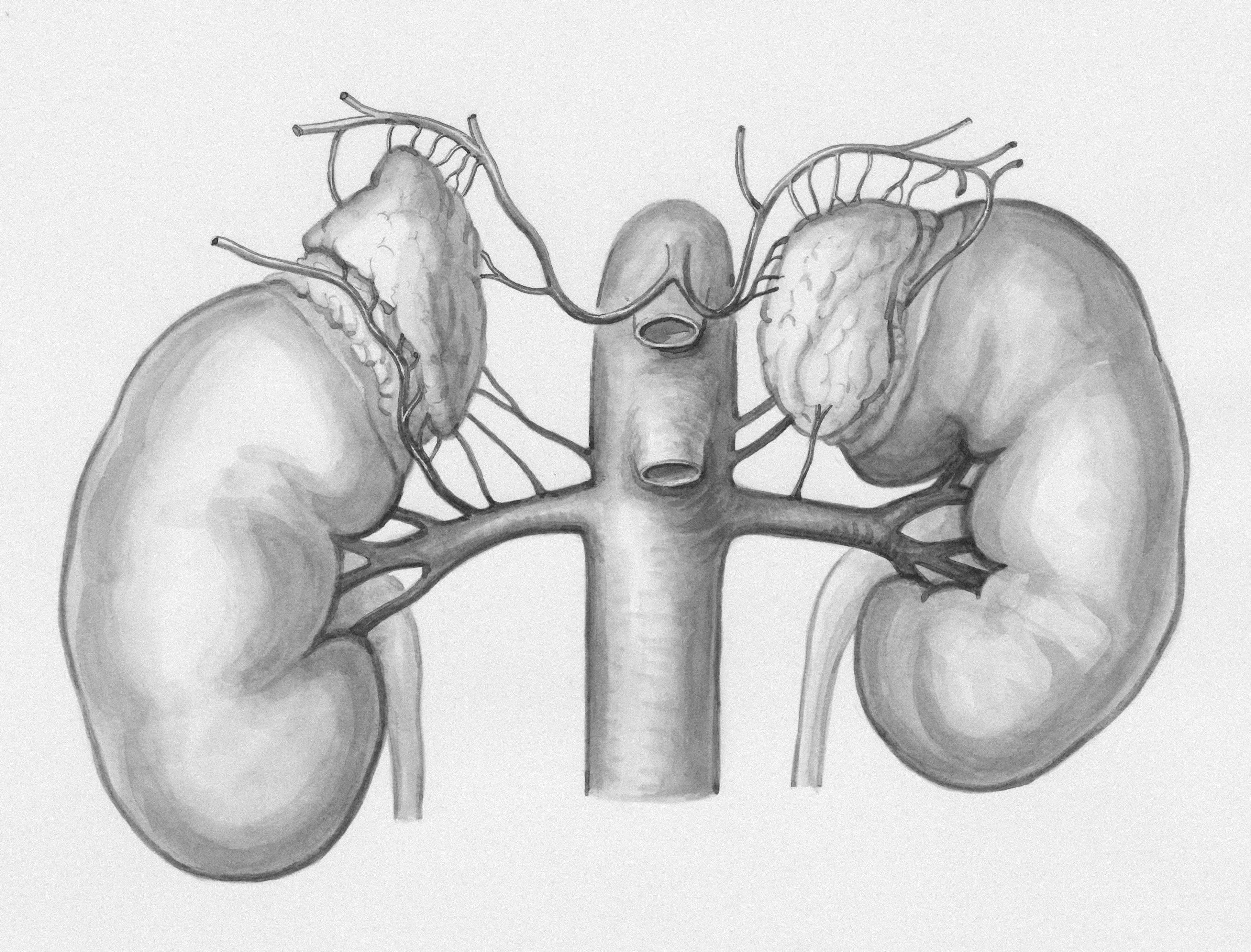
CKD at a Glance
Diagnostic code: A diagnostic code is the number VA uses to identify a condition in its rating schedule. CKD is rated under the "renal dysfunction" criteria in 38 CFR § 4.115a. The specific code depends on what's causing the kidney disease, and For example, chronic nephritis is DC 7502 and renal involvement in diabetes is DC 7541, and VA's genitourinary diagnostic code table in 38 CFR § 4.115b rates both as renal dysfunction.
Rating levels: 0%, 30%, 60%, 80%, and 100%.
Common paths to service connection: Secondary to another service-connected condition, most often diabetes or hypertension. Direct connection is possible but less common. CKD isn't presumptive on its own, though it can follow a condition that is.
Key evidence: Kidney function lab results over time, nephrology records, records tying your CKD to a service-connected condition, a medical opinion, and statements about daily impact.
Main exam: A C&P (Compensation and Pension) exam, a medical appointment VA orders to help decide your claim. The examiner reviews your kidney labs and may order new ones.
Official criteria: 38 CFR § 4.115a on eCFR.
How the VA Defines CKD
Chronic kidney disease means your kidneys have lost some of their ability to filter waste from your blood, and the loss has lasted over time. It isn't a single symptom. It's a measurable decline.
VA places CKD in the genitourinary system, which covers the kidneys, bladder, and urinary tract. Within that system, VA's rating rules sort problems into three areas: renal dysfunction (how well the kidneys work), voiding dysfunction (problems with urination, like leakage or frequency), and urinary tract infections. CKD falls under renal dysfunction.
The key number is your GFR, or glomerular filtration rate. GFR measures how much blood your kidneys filter each minute. A lower number means weaker kidney function. Most labs report eGFR, an estimated GFR calculated from a blood test for creatinine, a waste product your kidneys normally clear. VA's regulation says it will accept GFR, eGFR, or creatinine-based approximations of GFR when a medical professional determines they're appropriate and calculates them.
I know how jarring a lab-based diagnosis can be. When I was diagnosed with CKD, I got a letter in the mail after a standard blood panel, and I had a panic attack. Since then, I've learned to manage my symptoms and taken steps to protect myself from further damage. If you just got news like that, take a breath. A diagnosis gives you something concrete to work with, both medically and for a claim.
Two other measurements matter at the lowest rating level. ACR, the albumin/creatinine ratio, is a urine test that checks for protein leaking into your urine. Urine casts are tiny tube-shaped particles a lab can find under a microscope. Structural abnormalities, such as cysts or blockages seen on imaging, can count too.
A bit of background: VA rewrote these criteria in a final rule published September 30, 2021 (86 FR 54081, RIN 2900-AQ71), effective November 14, 2021. The rule replaced older descriptive language with GFR thresholds. If you're filing now, the GFR-based rules are what apply.
How the VA Rates CKD
VA rates CKD mostly on your GFR. Each level below requires the finding to last at least 3 consecutive months during the past 12 months, except for dialysis or transplant at 100%.
| Rating | What it generally means |
|---|---|
| 100% | GFR under 15 for at least 3 consecutive months in the past year, or regular routine dialysis, or being an eligible kidney transplant recipient |
| 80% | GFR from 15 to 29 for at least 3 consecutive months in the past year |
| 60% | GFR from 30 to 44 for at least 3 consecutive months in the past year |
| 30% | GFR from 45 to 59 for at least 3 consecutive months in the past year |
| 0% | GFR from 60 to 89, plus recurrent abnormal urine casts, structural kidney abnormalities, or an ACR of 30 mg/g or higher, for at least 3 consecutive months in the past year |
Read the full rating criteria on eCFR. Your rating helps set your monthly payment, and you can see what each rating pays in my pay rates post.
The 3-month rule is the part veterans most often miss. One bad lab result isn't enough. VA wants to see a sustained pattern, such as eGFR readings of 40, 42, and 38 across three straight months. If your labs are drawn once a year, you may not have the record VA needs, even if your kidney function really has dropped. A GFR of 60 to 89 on its own also doesn't reach 0%. You need one of the additional findings in the table at that level.
Pyramiding means rating the same disability or symptoms twice under different diagnoses, which 38 CFR § 4.14 prohibits. For kidney and urinary conditions, the regulation tells raters (the VA employees who decide your rating) to consider only the predominant area of dysfunction when a diagnostic code points to those areas. Distinct problems with symptoms that don't overlap can be rated separately. In practice, if your CKD is rated as renal dysfunction, VA generally won't add a second rating for overlapping urinary symptoms from the same disease.
If VA rated your kidney condition before November 14, 2021, under the old descriptive criteria, the 2021 change alone can't lower that rating. Under 38 U.S.C. § 1155, a rating schedule change can't reduce an existing rating unless your condition has actually improved.
Getting CKD Service Connected
Service connection means VA agrees your condition is linked to your military service. For CKD, there are three possible paths.
Direct Service Connection
Direct service connection under 38 CFR § 3.303 means the condition began during service. For CKD, that might look like elevated creatinine or an abnormal urinalysis caught on an in-service physical, followed by continued kidney testing and treatment after you separated.
This path is less common for kidney disease, because CKD often develops slowly, years after service. If you have in-service lab work showing kidney trouble, though, pull it. That paper trail is the foundation of a direct claim.
Secondary Service Connection
Secondary service connection under 38 CFR § 3.310 applies when a condition that's already service-connected caused your CKD or made it worse. Making a condition worse is called aggravation, and it counts too.
For example, say you're service-connected for hypertension, and over several years your kidney function steadily declined. You'd need a medical opinion explaining that your hypertension is at least as likely as not the cause of your CKD, or that it aggravated it.
That medical link is called a nexus. "At least as likely as not" means a 50% chance or better. Under 38 CFR § 3.102, when the evidence for and against you is evenly balanced, VA must resolve the doubt in your favor.
This is the path most CKD claims take, and it's where most of the fights happen. The opinion has to address your specific medical history, not kidney disease in general. I cover the conditions most often involved in the secondary conditions section below.
Presumptive Service Connection
CKD isn't a presumptive condition by itself, meaning VA doesn't automatically assume it's tied to service. It can still follow a condition that is presumptive. For example, type 2 diabetes is presumptive for veterans with qualifying exposure to Agent Orange. The PACT Act added high blood pressure (hypertension) to the same Agent Orange list in 2022, which matters here because hypertension is the other most common cause of CKD. If either condition is service-connected and later damages your kidneys, you can claim CKD secondary to it. The PACT Act, a 2022 law that expanded benefits for toxic exposure, added new presumptive conditions and exposure locations.
Evidence That Strengthens Your Claim
Strong CKD claims are built on numbers and a clear timeline. These pieces matter most:
A lab trend, not a snapshot: Gather every eGFR, creatinine, and ACR result you can find, especially from the last 12 months. Line them up by date so the 3-consecutive-month pattern is obvious. If your provider only draws labs once a year, ask whether more frequent monitoring makes sense for your care.
Nephrology records: Notes from a nephrologist (a kidney specialist) usually describe your stage, the suspected cause, and how the disease has progressed. Include referral notes and any imaging.
Dialysis or transplant records: If you're on dialysis, records showing a regular routine schedule matter directly for the 100% level.
A timeline tying CKD to your service-connected condition: Show when your diabetes or hypertension was diagnosed, how it was treated, and when your kidney numbers started to drop. That sequence helps a doctor write a solid nexus.
A nexus opinion: A letter from a doctor explaining why your CKD is at least as likely as not caused or aggravated by your service-connected condition. The strongest letters show the doctor reviewed your records, explain the reasoning, and address other possible causes.
Lay evidence: Lay evidence means statements from you or people who know you about what you've experienced or seen. For CKD, that might mean fatigue that cuts your workday short, a strict diet, or a dialysis schedule that shapes your whole week.
You and your family can write these statements on VA Form 21-10210. A spouse who has watched you plan every meal around potassium and sodium limits can describe that in concrete terms. My Personal Statement Workbook walks through how to describe those day-to-day effects clearly, whether you're writing your own statement or asking a family member for one.
If you're still gathering everything, submit an intent to file first. Under 38 CFR § 3.155, it gives you one year to complete your claim and can preserve an earlier effective date.
What to Expect at Your C&P Exam
A CKD exam is mostly about your labs. The examiner will review the kidney function results in your file and may order new blood or urine tests to confirm your current GFR. They'll also ask about your diagnosis, when it started, your treatment, and the conditions you believe caused it.
VA examiners record their findings on a DBQ (Disability Benefits Questionnaire), a standard form for each type of condition. For kidney disease, that's the Kidney Conditions DBQ, which VA also posts publicly so your own doctor can complete one. The examiner's job is to document whether your GFR has stayed in a given range for at least 3 consecutive months in the past year, so the dates on your labs matter as much as the numbers.
Bring a short summary: your lab results by date, your diagnoses with approximate dates, your nephrologist's name, and how CKD affects your daily routine. If you get labs drawn for the exam, make sure your regular doctor gets a copy too. My C&P Exam Prep Workbook includes a symptom log, a treatment history, and a one-page exam summary you can use to organize this.
Keep in mind that the examiner won't treat you or tell you your results. If you want a refresher on what a C&P exam is and isn't, my general C&P exam guide covers the whole process.
Common Reasons CKD Claims Are Denied
Most CKD denials trace back to a few patterns. Board of Veterans' Appeals decisions show how these play out, though under 38 CFR § 20.1303 Board decisions aren't precedential. Each one applies only to the veteran in that case.
Labs that don't show the required window: Your readings may be months apart with gaps, or only one recent result falls in a rated range. VA may decide the record doesn't show a sustained level of dysfunction.
The nexus points to a different cause: In one 2022 Board decision, the judge denied secondary service connection because the evidence tied the veteran's CKD to non-service-connected diabetes rather than service-connected hypertension. If you have more than one possible cause, your nexus opinion needs to explain why the service-connected one is at least as likely as not responsible.
No diagnosed nephropathy: In a 2017 Board decision, a secondary claim failed partly because the record showed no confirmed diagnosis of nephropathy (kidney damage) after the veteran's diabetes diagnosis. A diagnosis of the underlying condition isn't the same as a diagnosis of the kidney damage it caused.
A weak or missing medical opinion: A one-line letter saying CKD is "related to" a condition rarely carries much weight. Neither does an exam that never addresses aggravation.
If VA denies your claim, the reason in your decision letter tells you what to fix. A new nexus opinion usually means a Supplemental Claim, while a clear error in how VA handled your evidence may fit a Higher-Level Review. VA's decision reviews page explains each option. I go deeper into the most common reasons VA claims get denied in my general guide to claim denials.
Secondary Conditions Linked to CKD
CKD often sits in the middle of a chain of conditions, so it helps to look in both directions.
Conditions that often lead to CKD: Diabetes mellitus and hypertension are the conditions veterans most often claim as the cause of their CKD, and they come up again and again in Board decisions. Kidney damage from diabetes is called diabetic nephropathy. If either condition is already service-connected, or could be, it's worth asking your doctor whether it plays a role in your kidney disease.
Heart disease and nephritis: VA's rules recognize a close relationship between kidney and heart disease. Under 38 CFR § 4.115, separate ratings aren't assigned for heart disease and any form of nephritis (kidney inflammation) because of the close interrelationship of cardiovascular disabilities. If you have both, VA may assign one rating covering both rather than two. That isn't a mistake in your decision letter. It's how the rule works, and it's worth understanding before you count on two separate ratings.
Removal of a kidney: If you've had a kidney removed, VA rates it as renal dysfunction when the remaining kidney has nephritis, infection, or other disease. But if the absent kidney is your only kidney disability, VA rates the absent kidney and any hypertension or heart disease separately.
When TDIU May Apply
TDIU pays you at the 100% rate when your service-connected conditions keep you from holding a substantially gainful job, even if your combined rating is below 100%. You apply on VA Form 21-8940.
Schedular TDIU, meaning you meet VA's rating thresholds, requires one service-connected disability rated at least 60%, or two or more with a combined rating of at least 70% and one of them rated at least 40%, under 38 CFR § 4.16(a). A 60% CKD rating alone meets the single-disability threshold. Extraschedular TDIU under § 4.16(b) is for veterans who don't meet those thresholds but still can't work because of their service-connected conditions.
At the 80% and 100% levels, TDIU may matter less, since the rating itself is already high. It can matter a lot in the 30% to 60% range, especially when CKD fatigue combines with other conditions to make steady work impossible. VA doesn't have special TDIU criteria for kidney disease. The general rules apply, and evidence like missed work, reduced hours, or a dialysis schedule that conflicts with a job carries real weight.
One caution: in a 2022 Board decision, the veteran's TDIU claim was decided alongside the underlying CKD claim, and both were denied when the nexus failed. TDIU depends on service-connected conditions, so get the CKD claim's medical link solid first. My guide on TDIU eligibility and the schedular thresholds covers the full process.
Conclusion
VA rates CKD on objective kidney function numbers, mainly GFR sustained for at least 3 consecutive months in the past year. Most veterans connect CKD as secondary to diabetes or hypertension, and that's where claims are most often won or lost. A clear lab trend and a well-reasoned nexus opinion make the biggest difference.
Your next step is simple. Pull your last 12 months of lab results, or request them from your providers, and check whether your eGFR readings show a sustained pattern across 3 consecutive months before you file or ask for an increase. Then reach out to an accredited VSO. You can find an accredited representative near you for free, and they can help you build the medical link VA needs to see.
Wondering how this applies to your condition? Every veteran's situation is a little different. Schedule a free consultation to talk through what you've read and get connected with a VSO who can help with your claim.
Continue Reading

Everything you need for your claim, in one bundle.
A VA claim has three big moments: gathering your evidence, writing your statements, and walking into your C&P exam. Each workbook in this series was built for one of them. Together, they take you from the day you decide to file to the day you get your decision, and they cost less than buying them separately.
What's inside:
C&P Exam Prep Workbook: a two-week prep plan, a daily symptom log, flare-up and functional impact worksheets, and a one-page exam summary, so you can describe your condition completely and accurately on exam day.
Evidence Organizer: a claim overview with an Intent to File tracker, an evidence checklist for each condition, logs for records requests, submissions, and calls, and a matching binder and folder index, so you always know what you have, what's missing, and what's next.
Personal Statement Workbook: the five rules of a strong statement, a step-by-step guide to writing and editing your own, and a printable guide to hand to the people writing buddy statements for you.
Five free condition inserts: Mental Health, Migraines & Headaches, Tinnitus & Hearing, Sleep Apnea, and Joints & Spine. Use only the ones that apply to you.
Best value: $35 for the complete set, compared with $45 if you buy all three workbooks separately. You save $10.
Three fillable PDFs (47 pages total), plus five condition inserts, delivered as a single download. Type into them or print them.
Everything in these workbooks is based on public VA rules and forms. What you're paying for is the organization, the plain-language guidance, and lessons from someone who's been through it, plus free updates whenever the rules change.
Educational resources only. Not legal or medical advice. Drakov Industries does not prepare, file, or represent claims. For help with your claim, contact a VA-accredited Veterans Service Officer. Their help is free.